
One Strip cake moulds: control fill in the 1500 ml format
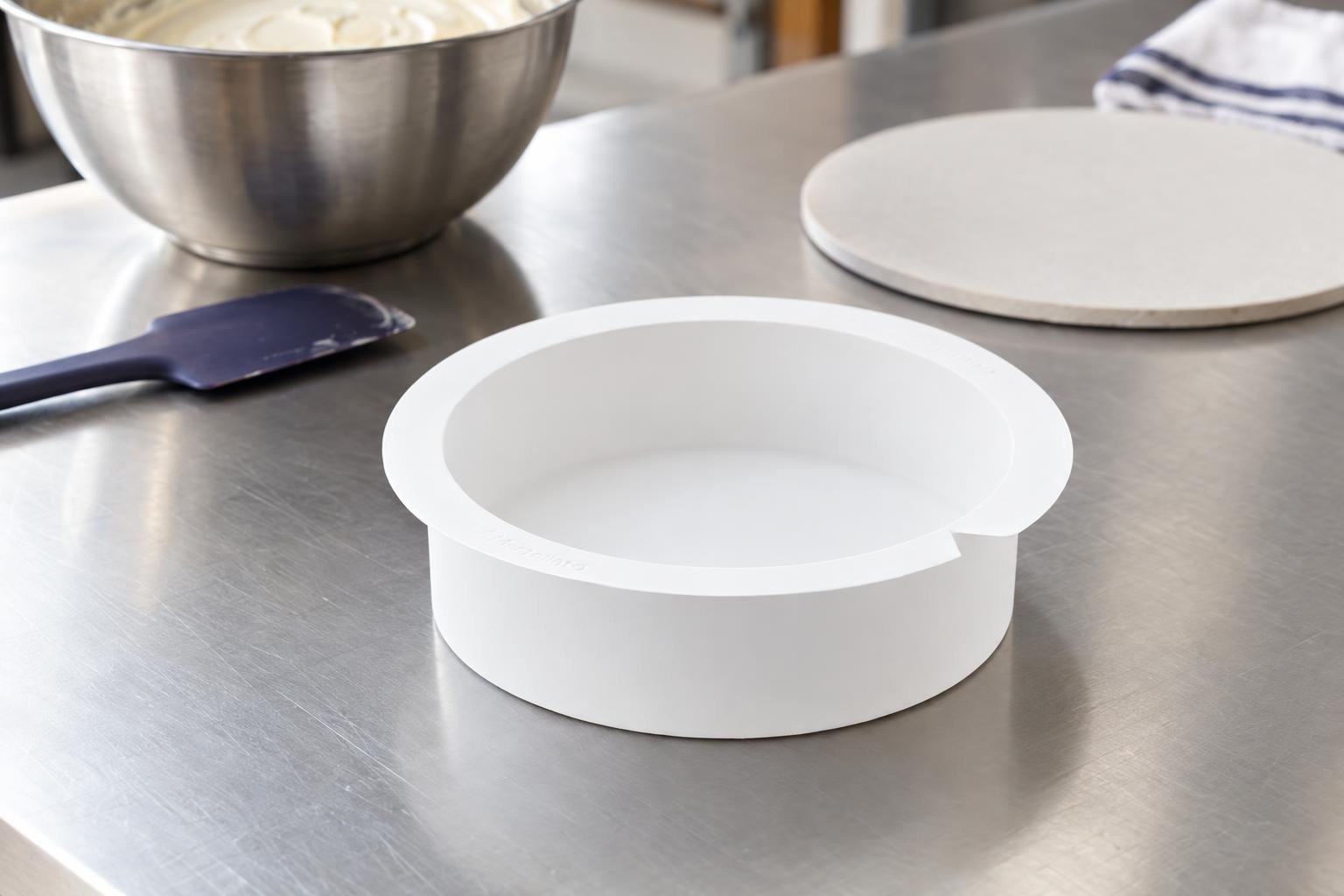
Plan your ONE22 cake as a complete 1500 ml build, counting bases, fillings and inserts within its Ø220 x H40 mm format.
Your ONE22 has a stated 1500 ml capacity for the whole cake build, not 1500 ml of filling plus a base and inserts. Plan every component that occupies the mould before you portion filling for production.
For your pastry team, the task is to connect the layer plan to the actual fill level. Use the stated dimensions as your starting point, then check a trial cake before repeating the assembly.
Define the finished cake within Ø220 x H40 mm
Start with the cake section you want to assemble inside the mould. The Martellato ONE22 format is Ø220 x H40 mm, so your plan needs to account for both the diameter and the combined height of the layers.
List the components in assembly order. Include the base, each filling layer, every insert and any finishing layer placed inside the mould. Keep decoration added outside the mould separate from this internal assembly plan.
Give each component a planned thickness and note its diameter where relevant. Do not check only the height at the edge: your intended build must also fit at the centre, including any insert covered by filling.
Check the ONE22 specification and disposable format
Confirm the SKU before you prepare the trial. The One Strip family includes different formats; your assembly sheet should identify ONE22 rather than relying on the family name alone.
| Specification | Provided detail |
|---|---|
| Brand | Martellato |
| Product family | One Strip |
| SKU | ONE22 |
| Format | Disposable |
| Product size | Ø220 x H40 mm |
| Stated capacity | 1500 ml |
| Pack quantity | 100 pcs |
| Stated applications | Cakes, parfaits and individual cakes |
Plan your mould requirement around the disposable format and the stated pack quantity. Keep the product specification alongside your recipe sheet so that a change of mould is not treated as an unchanged assembly.
Plan the combined volume of bases, fillings and inserts
Treat 1500 ml as the stated capacity available to the complete build. A base and an insert occupy part of that space; they are not additions outside the filling allowance.
On your worksheet, separate the components into bases, inserts and fillings. Record the dimensions of solid components and the measured quantities of fillings used in the trial. Do not subtract component weights in grams from a capacity expressed in millilitres.
If you use volume estimates for solid components, label them as estimates and verify the resulting plan by assembly. Avoid allocating all remaining capacity to filling before you have checked how the components sit together.
Tip: check the fill level after each component, not only after the final layer.
Keep a running height record beside the quantity record. Together, these give your team a way to check both the recipe allocation and the physical build.
Assemble a trial cake and check each stage
Prepare one trial using the components and assembly sequence you intend to repeat. Measure and record as you work rather than reconstructing the quantities afterwards.
- Check the base. Measure its thickness and diameter, position it as planned and check that it sits evenly. Record its height within the mould.
- Add the first filling allocation. Record the quantity used, spread it evenly and check the level at several points around the mould.
- Position the insert. Check its placement and the resulting height before adding the next filling. Note any difference from your planned section.
- Continue through the layer sequence. Record each addition separately. Compare the cumulative height with your worksheet before proceeding.
- Check the final fill. Inspect the centre and perimeter against your intended finish within the 40 mm height. Record the actual quantities used, including any filling left unused.
Do not add the rest of a prepared filling simply because it belongs to the recipe batch. Let the checked assembly determine the quantity required for this mould.
Correct overfilling and uneven layers
If the trial finishes too high, identify where the actual build first departed from the plan. Check base thickness, insert thickness and individual filling allocations rather than reducing only the final layer.
If the surface is uneven, check the layers beneath it before covering the difference with more filling. Review component placement and compare the height readings around the mould.
Change one part of the plan at a time, record the correction and repeat the trial. Keep revised quantities distinct from the original recipe so your team does not combine instructions from two versions.
Record the standard and distinguish the shallower ring
Once you approve the trial, record the SKU, component dimensions, assembly order, filling quantities, intermediate height checks and final fill level. Add a section sketch or trial photograph to show your team what the written standard describes.
The Martellato Ø220 x H25 mm cake ring shares the nominal diameter, but not ONE22's 40 mm height. Do not transfer the same layer plan to this shallower format or assume nesting compatibility.
Order the Martellato ONE22 One Strip disposable cake mould from its product page.
Products in this article
 Round Cake Ring Ø220x25mm Stainless Steel - Martellato 1H25X22€6.89 excl. VAT
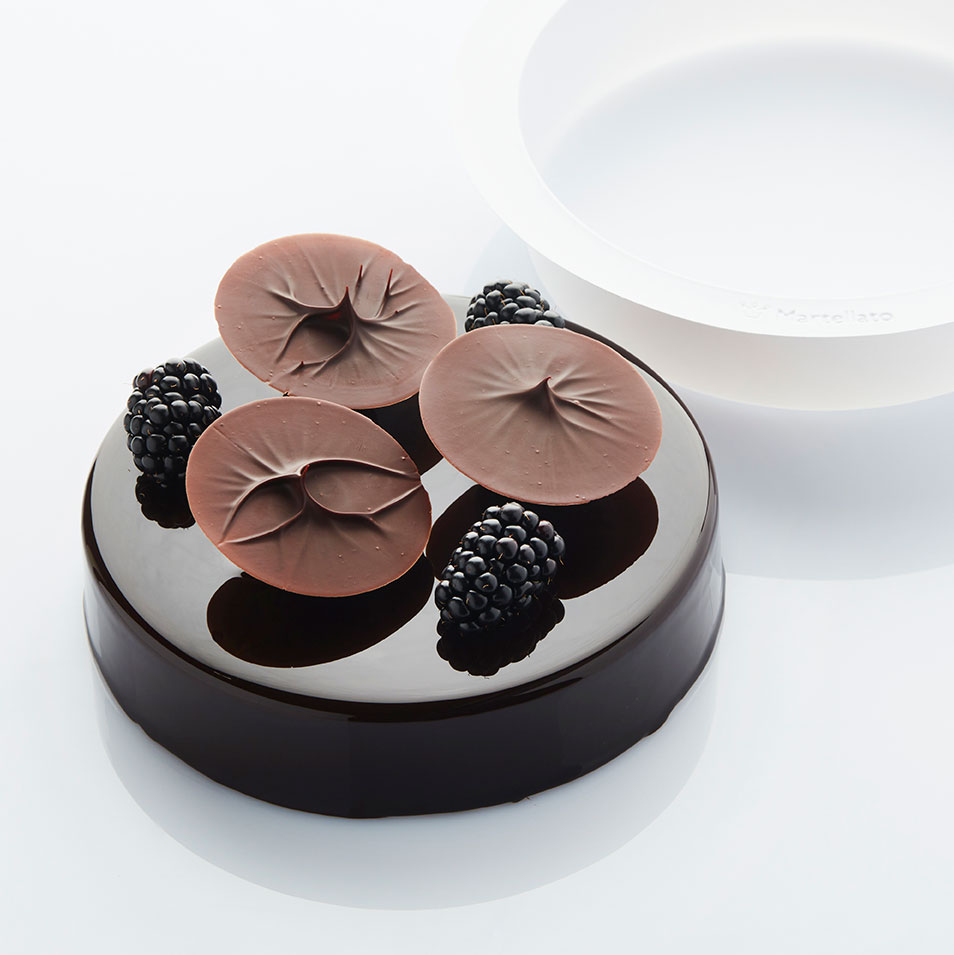 One Strip Disposable Cake Mold Ø220 x H40 mm, 100 pcs - Martellato ONE22€64.20 excl. VAT
Prices exclude VAT. Open any product above to see when it ships and to order it.
Questions
- What are the dimensions and stated capacity of ONE22?
- The Martellato ONE22 has a stated product size of Ø220 x H40 mm and a capacity of 1500 ml.
- Is the 1500 ml capacity a filling-only allowance?
- No. The stated capacity applies to the complete cake build within the mould, including bases, fillings and inserts.
- Is ONE22 disposable, and how many pieces are supplied?
- ONE22 is a disposable mould supplied in packs of 100 pieces. Its stated applications are cakes, parfaits and individual cakes.