
Bloomix blooBeer Glasses: Plan Stock in Packs of 24
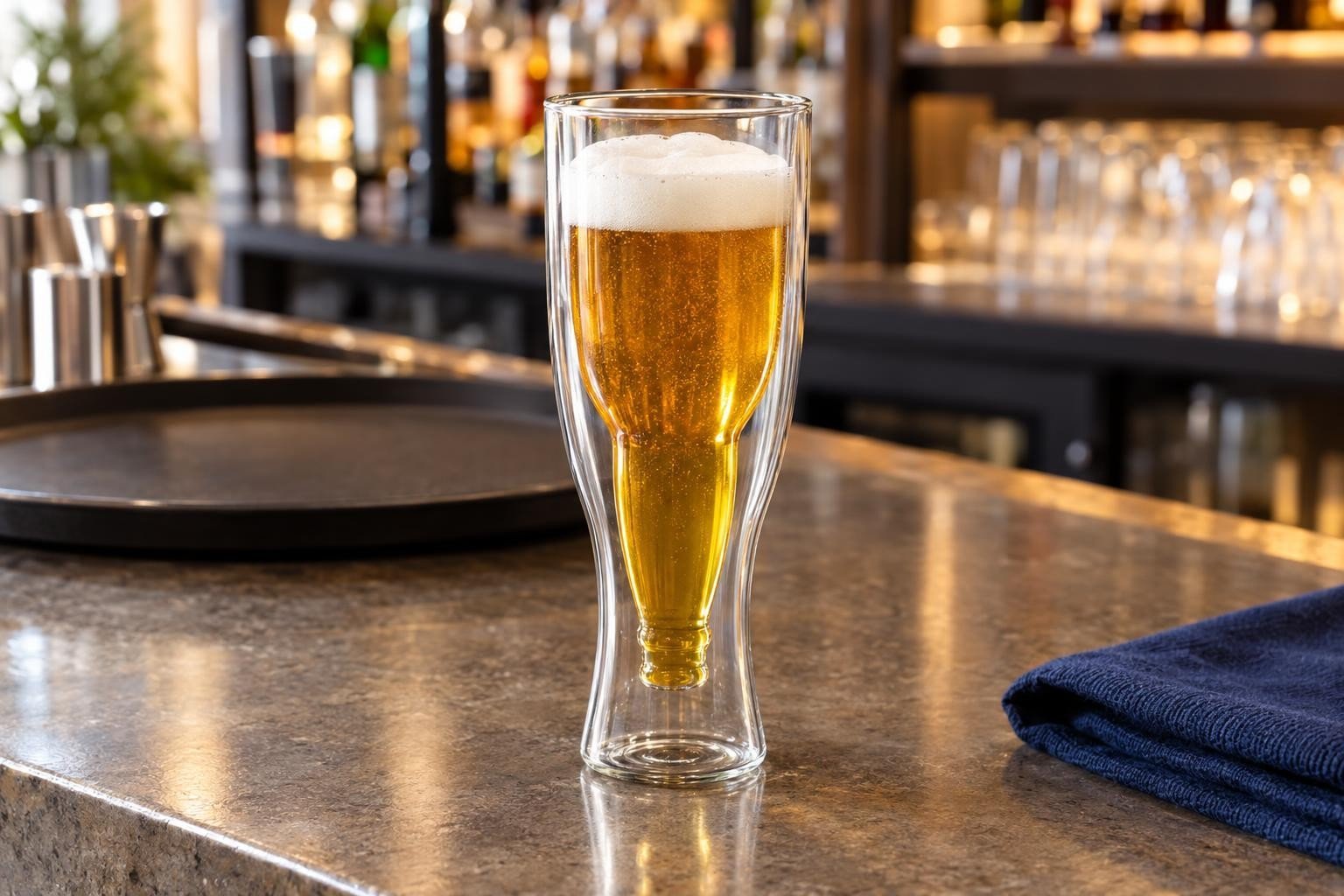
Calculate working stock in packs of 24, then check the blooBeer glass’s 205 mm height and 90 mm diameter against your bar layout.
By Atmar Horeca team
A pack of 24 is your purchasing unit, not your service-stock target. For your bar, start with the glass dimensions, establish how many glasses will be unavailable during peak service, then convert that requirement into whole packs.
Start with the glass and its dimensions
The Bloomix blooBeer has a maximum filling quantity of 400 ml, a height of 205 mm and a diameter of 90 mm. It is double-walled, dishwasher-safe, and individually handmade and mouth blown. Use these details as the starting point for your storage and handling checks.
| Specification | Provided detail |
|---|---|
| Product | Beer Glass bloomix blooBeer, 400ml |
| Brand | Bloomix |
| SKU | B-024-400 |
| Maximum filling quantity | 400 ml |
| Height | 205 mm |
| Diameter | 90 mm |
| Pack size | 24 glasses |
| Construction | Double-walled |
| Cleaning suitability | Dishwasher-safe |
| Manufacture | Individually handmade and mouth blown |
Keep the capacity and external dimensions separate in your planning. Capacity informs your serving specification; height and diameter inform where the glass can be stored, carried and washed.
Set your serving volume below the maximum
For a serving trial, assume a target liquid portion of 330 ml; this is an example operating choice, not a stated serving capacity. Test that portion with your beer and intended foam head before making it your house specification.
The stated 400 ml is the maximum filling quantity. Do not plan on 400 ml of liquid plus foam fitting within it. Set your liquid portion below the maximum and check the finished pour for foam space and clearance below the rim.
Record the accepted portion for your team. Keep the stock calculation in glasses issued, rather than litres sold, so that each serving counts as one glass entering the service cycle.
State demand, return-time and reserve assumptions
For the worked example, assume peak demand is 80 servings per hour, each using one blooBeer glass. Assume demand continues at that rate throughout the return interval used in the calculation.
Assume each glass takes 60 minutes from being issued to becoming clean and available for another pour. Within that interval, assume 40 minutes for guest use and collection, followed by 20 minutes for wash-return, including queueing, washing and return to the service point. These are planning assumptions, not product or dishwasher performance figures.
Assume you want a reserve equal to 25% of the calculated circulating requirement. Assume the stock target starts from zero usable blooBeer glasses, so the example calculates a complete initial purchase rather than a top-up.
Replace these assumptions with your own observations. In particular, do not substitute the dishwasher programme duration for the full issue-to-ready interval: your calculation must also account for glasses still with guests or waiting for collection.
Calculate working stock and round up to packs
Use peak glasses issued per hour multiplied by the full return interval in hours to calculate the circulating requirement. Add the stated reserve, then round the total up to whole packs of 24.
- Circulating requirement: 80 glasses per hour × 1 hour = 80 glasses.
- Reserve: 80 × 25% = 20 glasses.
- Working-stock target: 80 + 20 = 100 glasses.
- Whole packs: 100 ÷ 24 = 4.17 packs, rounded up to 5 packs.
- Purchased stock: 5 × 24 = 120 glasses.
Under these assumptions, four packs provide 96 glasses and fall short of the 100-glass target. Five packs provide 120 glasses, leaving 20 above that target through pack rounding. Keep this rounding surplus distinct from the 20-glass reserve already included in the calculation.
Tip: Time a glass from its first pour until it is clean and back at the service point, not just while it is in the washer.
Check shelf, tray and wash-rack clearance
Before ordering, compare the 205 mm height and 90 mm diameter with your actual bar layout. Check the complete handling route rather than only the final storage position.
- Shelves: measure usable height and depth, and check that you can lift and remove a glass without contacting the shelf above.
- Trays: check the usable surface within any rim and trial your intended arrangement. Do not infer a carrying count from diameter alone.
- Wash racks: check compartment openings, usable height and the loaded rack’s clearance through your machine.
Dishwasher-safe does not establish compatibility with a particular rack or machine. Confirm the physical fit before committing your storage plan to the calculated quantity. Plan space for all 120 glasses in this example, not just the 100-glass working target.
Trial one service and revise your target
During a representative busy service, record glasses issued, the full issue-to-ready interval and the lowest clean-stock count. Note where glasses wait: with guests, at collection, before washing or before return to the bar.
Compare those observations with the example assumptions. Revise demand, return time and reserve explicitly before recalculating, then round the revised requirement up to packs of 24. Keep the serving specification and clearance checks alongside that stock record so your next order follows the same method.
View the Bloomix blooBeer product page, where you can order the glasses in packs of 24.
Products in this article

Prices exclude VAT. Open any product above to see when it ships and to order it.
Questions
- What are the Bloomix blooBeer glass’s capacity and dimensions?
- The maximum filling quantity is 400 ml. The glass is 205 mm high and 90 mm in diameter.
- How many blooBeer glasses are in a pack?
- Each pack contains 24 glasses. Five packs contain 120 glasses.
- Is the Bloomix blooBeer glass dishwasher-safe?
- Yes, it is dishwasher-safe. Its stated dimensions are 205 mm high and 90 mm in diameter; compatibility with a particular wash rack or machine is not specified.